

Jump to:
Chicken and hen breeds
Affectionate, intelligent and curious, chickens can make great pets. Like any animal, they require proper care; fresh water, healthy foods, a high-quality home environment, room to exercise and explore, and regular health checks.
Note: Chickens rehomed from farms are almost always laying hens, however throughout this page we’ll refer to them generally as chickens.
The best chickens for beginners include:

Silkies

Gingerbread Ranger

Rhode Island Red

Sussex and Sussex Bantam

Orpingtons
Best chicken breeds for eggs
The best chickens for eggs are egg laying hens who’ve been bred for their ability to produce high quantities of eggs. The four most commonly kept breeds that lay the most eggs annually in the UK are:
- Gingernut Ranger: 300 eggs
- New Hampshire Red: 280 eggs
- Rhode Island Red (dual purpose): 260 eggs
- Sussex and Sussex Bantam (dual purpose): 260 eggs
You can find out more about laying hen breeds on our laying hens page.
Register your chickens
From 1 October 2024 in England (and 1 September 2024 in Scotland), new measures require all bird keepers, no matter the flock size, to register their birds with the Great Britain Poultry Register.
The Department for Environment, Food & Rural Affairs (DEFRA) requires you to register, so the Animal and Plant Health Agency (APHA) can get in touch with disease alerts and guidance that will help you care for your birds.
Always contact a vet if you're concerned about the health and welfare of your chickens.
Housing and space for chickens
From chicken coops to chicken runs, your chickens' home environment is where they’ll express their natural behaviours, benefiting their health and welfare. The better it is, the happier they’ll be.
Chicken coop
A garden chicken coop is your chicken’s home, so naturally they deserve the best. Chickens need a warm, dry and well-ventilated chicken house, which should include:
A big enough entrance: Allowing chickens to pass through easily without having to crouch. More than one entrance helps avoid bullying and encourages them to use the outdoor area.
Perches: These should be around 3 to 5cm wide with rounded edges, and the height should suit the size of the birds. There should be enough space for all chickens to comfortably roost at the same time (from 15cm per chicken), and enough distance between perches for them to get up and down without hurting themselves. A height of 40cm enables chickens to feel safe and prevents pecking from other active chickens in the group.
Covered flooring: Covered with dry material such as wood shavings or straw to allow foraging and comfortable resting. Using a substrate like wood shavings is also great to allow birds to dustbathe, which is particularly important when it's wet outside. You should top up or replace any substrate when needed.
Space: Housing of at least 1m² should be provided per bird, where possible. If this isn’t possible, birds should be stocked at no more than three birds per m² of coop.
Chicken coops need to be cleaned and disinfected regularly to remove parasites.
Outdoor space
An area of your garden, known as a chicken run, when equipped properly, can be a haven for chickens. As well as their chicken house, chickens need a run to roam in for their physical and mental wellbeing. This should include:
Short grass: Keep grass short, as long strands can become trapped in the chickens' digestive system.
Space: The area should be large enough to allow wet, muddy or barren areas to be sectioned off, and to minimise the risk of disease, while still allowing enough space to roam.
Shelter: Provide overhead cover, such as small trees or purpose-built shelters, to give protection from the sun, bad weather and wild animals, and to encourage them to explore.
Dry soil: Where they can dust bathe and forage.
How to protect chickens from foxes
The best way to keep chickens safe from potential fox attacks is to ensure their coop is secure. To fox-proof your chicken coop, you should:
Choose sturdy fencing: Build your coop with strong, meshed fencing, at least 6ft tall, sloping outwards, to stop foxes climbing over it. Don’t use chicken wire as it’s not predator-proof – foxes can chew through it. Welded mesh is a good, heavy-duty steel alternative that prevents both foxes (and rodents) chewing into it.
Prevent digging: Install fencing a foot into the ground or place a mesh-skirt around the base of the coop, flat on the ground at a width of 40cm, and place bricks or large stones on top and cover with soil. This will stop foxes digging underneath the fence.
Make sure all chickens are in the coop at night: When your chickens go to roost for the night, ensure they’re safely locked inside. Foxes are nocturnal animals, so keeping your chickens indoors overnight is an added measure of security.
Remember: Foxes are wild animals; they hunt chickens as a means of food, not an act of cruelty.

From solving puzzles to purring when happy, chickens can make truly intelligent, rewarding companions – and a long-term commitment. To ensure they aren't just a passing novelty, it’s vital to understand how to properly care for them and give your flock the healthy life they deserve.
What to feed pet chickens
Chickens need a balanced diet of grains, proteins, supplements and the occasional treats to keep them happy, healthy and well-fed. Choosing pre-formulated feeds from reputable agricultural or specialist poultry suppliers is a great way to cover all their nutritional requirements.
When getting feed, make sure to:
- Choose a complete food rather than mixed: This means the feed contains all the necessary nutrients to keep your chickens healthy.
- Store in a cool, secure and dry place: To prevent it going off or spoiling.
Their food should be suited to their age and breed. For example:
- Adult chickens: Around 120g per day (and up to 180g in winter) of layers pellets
- Chicks: Around 28g per day of chick starter crumbs
- Larger breeds: May require more
- Smaller breeds: May require less
Simple chicken feed formula
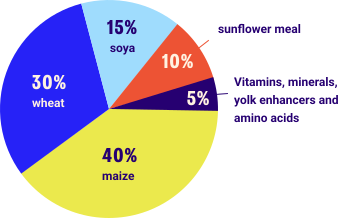
As chickens don’t have teeth, they also need insoluble grit, such as hard flint grit, which helps them to grind and digest their food. Oyster shell is a soluble grit that can provide extra calcium in their diet, which is particularly important for laying hens as it helps them form stronger eggshells.
Food should be given to them in the chicken house, or if outside, in a sheltered spot, to keep it clean and dry, and to avoid attracting other wildlife.
Chickens also need constant access to clean, fresh water in their chicken house. In winter, make sure you remove ice from their water (never use chemicals to do this – instead, use warm water to melt the ice). Using specific chicken drinkers should stop young chicks climbing in and drowning, as they’re designed to contain and dispense water.
Don't forget to clean their food dispensers and drinkers regularly. If you change the drinkers, be sure to give your chickens the same type that they're familiar with.
How many chickens to keep together
Chickens are social creatures – not only do they love company, they need it. Chickens forage, roost and dust bathe together, which prevents loneliness, stress and depression setting in. Their flock is a vital part of their welfare.
If you’re thinking of getting chickens, we highly recommend keeping at least three hens (female chickens) that get on well together. Cockerels (male chickens) shouldn't be kept together unless they've grown up together and get on well, or else they may fight.

When introducing new chickens to the flock:
- Start with a ‘see but no touch’ introduction: Begin by bringing the new chickens into view of your existing flock, so they can see and hear them, before merging them fully. This also acts as a quarantine period.
- Share the same space for small periods: Let the chickens share the same space for short times over a few days. Do so at dusk, when they’re more focussed on roosting than fighting with new flock members. Increase the time gradually, and merge them fully when you feel they’re ready to do so.
- Black out windows in summer: Chickens should be let out of the coop when the sun rises, so using a black plastic bag to cover the windows in summer will prevent bullying before you’re up.
- Be careful when merging: Mixing chickens that aren't familiar with each other can lead to aggression and bullying. There’ll be a natural amount of dominant behaviour asserted (such as feather pecking) as they establish a pecking order, however if the bullying becomes consistent and skin is broken, this is when you should separate them.




Health care for pet chickens
Healthy chickens are bright-eyed, alert and curious creatures. To keep them happy and healthy, general husbandry (committing to feeding, housing and general care) is essential. Providing nutritious food, a suitable and clean home environment, and regular vet check-ups are all ways to ensure their welfare.
Taking the time to learn your chickens’ routines and behaviours will help you notice if anything is out of the ordinary. If you’re concerned about your chickens, contact your nearest vet for advice.
Signs of poor health in chickens include:
- Hunched posture
- Erect feathers
- Head tucked under the wing
- Hiding in corners
- Dirty feathers
- Lame
- Runny faeces stuck to rear feathers
- Discharge from eyes or nostrils
Feather pecking
When chickens feel unwell, stressed or unable to act on natural instincts, they may engage in feather pecking.
Feather pecking is where hens peck and pull at the feathers of other hens, typically around their back and vent area (the opening from which waste is removed and eggs are laid, also known as the cloaca) sometimes leading to more serious injuries and even cannibalism.
It’s an abnormal behaviour and different to aggressive pecking, which is when chickens peck around the head of other birds (but don’t usually pull out feathers), used to establish hierarchies. Feather pecking can affect hens in any system, including commercial farming systems and hens kept as pets. Outbreaks of feather pecking can happen suddenly.
Feather pecking in hens is believed to be a redirected foraging behaviour. The reasons behind it can vary, but include:
- Environment: Factors such as temperature, lighting and lack of enriching items can increase the risk.
- Nutritional deficiencies: Lack of nutritional foods can lead to pecking as they’re attempting to replace the missing nutrients.
- Poor health and diseases: Can cause stress and feather pecking.
- Pecking order: Hierarchies within the flock can result in bullying and injuries.
- Sudden changes: Such as changes to their feed or environment, which can cause stress channelled through feather pecking.
Hens in back gardens may experience stress due to a change in diet or environment, diseases or limited resources (such as enrichment items), increasing their likelihood of feather pecking.
The most common cause of feather pecking is the stress experienced due to change; changing diet, environment, flock members, etc. To reduce the risk, make sure to:
- Make any changes gradually
- Add visual barriers to the coop – such as perches, partitions and areas of varied heights – to provide a space for chickens to get away from others
- Keep an eye on your chickens’ behaviour
- Ensure they have plenty of dry, clean litter
- Provide enriched items
- Feed them a nutritional diet
- Provide more than one feeder/drinker so the resources can be better shared between the chickens
- Regularly and calmly check them for signs of discomfort and injury
Parasites
Chickens and laying hens are prone to various parasites and mites that can affect them internally (such as their gut) or externally (such as their feathers). The best way to manage an outbreak of any parasite is to treat the individual chickens and thoroughly clean their environment.
The most common parasites are:
Worms
There are three types of worm parasites; gapeworms, tapeworms and roundworms. Gapeworms live inside a chicken’s trachea (throat), tapeworms attach themselves to their intestinal linings, and roundworms are found in their digestive systems.
Chickens can directly or indirectly consume worm eggs, which grow and live inside the chicken, reproducing and being passed on through chicken droppings to continue the cycle.
Signs of worms include:
- Reduced egg production
- Diarrhoea
- Lethargy
- Increased appetite
- Weight loss (severe cases)
- Gasping for air (chickens with gapeworms)
A serious infection can be fatal. To reduce the risk or rid your chickens of worms, they need regular worming, particularly if they're kept in the same outdoor area for more than a month.
Move chickens with worms to a new grazing area, to prevent them from picking them up again by eating already-infested droppings.
Lice
These are 2 to 3mm in size and can be found all over the body in the skin beneath the feathers. They lay their eggs around the shafts of the feathers. They’re common parasites that aren’t much of an issue in small quantities.
Signs of lice include:
- Reduced egg production
- Scratching
- Sore or red skin around the vent area (the opening from which waste is removed and eggs are laid, also known as the cloaca)
- Feather loss or damaged feathers
- Overpreening
- Lice spotted crawling beneath the feathers
- Nits (white-grey and hard egg clumps stuck to the bottom of the feather closest to the skin), especially around the vent area
Chickens often suffocate lice by dustbathing. If they’re suffering from a large infestation of lice, you can help rid them by adding a chicken-safe louse powder to their dustbath.
Red mites
These are smaller and can be found under the wings, or living in chicken coops, particularly wooden coops.
Signs of red mites include:
- Reduced egg production.
- Pale comb (the spiky, fleshy, usually red section on top of their head) and wattles (the fleshly faps at the sides of their head).
- Spotting red mites in the coop or around the chicken’s vent area (the opening from which waste is removed and eggs are laid, also known as the cloaca).
- Anaemia, characterised by lethargy, reduced appetite, paleness, bloody stools or dull feathers.
To reduce the risk of red mites, or to remove any infestations, clean the coop regularly – consider a plastic coop (red mites struggle to settle in plastic) – and keep a close eye on your chickens.
Red mites and lice are more commonly seen in summer – to reduce the risk, try to promote dustbathing and consider switching to a plastic coop.

Bird flu warning
Due to the Avian Influenza Prevention Zone (AIPZ) currently in place across the UK, don’t touch or handle sick or dead birds. If you have to, thoroughly wash your hands immediately afterwards, keeping them away from your face or food.
Find out more about bird flu

