
Extreme conformations in pets
Pets are part of the family; we love them not for their purpose, but for their presence. Yet many people are prioritising appearance over health and welfare, breeding pets for certain physical and extreme features which lead to unnecessary suffering.
On this page you’ll learn what extreme conformations are, which animals are affected, the welfare issues they cause and their impact on animals, owners and society.

Jump to:
What is an extreme conformation?
An extreme conformation is an exaggerated part of an animal’s shape, bodily structure or general appearance, that’s been significantly altered by humans. These are unnatural modifications, chosen for aesthetic or superficial reasons to breed a desired trait into a pet. This is called selective breeding. The resulting extreme features can greatly impact an animal’s health and welfare, often causing lifelong suffering.
Extreme conformations impair normal functioning and behaviour – like breathing, walking and communicating. Though they’re commonly seen in dogs, they affect all animals, including cats, rabbits, rodents, fish, reptiles and horses. Many will have more than one extreme conformation.
Examples of extreme conformations include:
- Brachycephaly (flat-faced)
- Bulging eyes
- Bow-legged
- Corkscrew tails
- Droopy ears
- Lop-ears
- Undershot jaw
- Excess fur
- Folded ears
- Hairlessness
- Long bodies and short legs
- Taillessness
- Skin folds
- Facial folds
- Dished faces (horses)
- No tails (cats and rodents)
- Unusual colour markings (reptiles)
- No scales (reptiles)
Because extreme conformations and the pain they cause are often underrecognised, these features continue to be bred for, normalising the desire to prioritise appearance over welfare. Sadly, some are even growing in popularity.
The increased demand for aesthetically-pleasing pets, and the lack of regulation, enforcement and awareness of the pain caused by extreme conformations, has led to the issue reaching a crisis point.
We need to change the narrative; prioritising an animal’s quality of life over their looks.


The RSPCA is strongly supportive of efforts to address the significant harms caused to companion animals from breeding for exaggerated physical features.
Which animals are affected?
The most popular companion animals affected by extreme conformations include:
Dogs
Cats
Rabbits
Horses
Though less considered, other companion animals such as guinea pigs, rats, mice, birds, fish and reptiles are also bred to have unnatural physical features such as no fur, a lack of tail, excessive plumage and unusual colour markings or no scales.
What issues do extreme conformations cause?
The consequences of extreme conformations are far reaching – they can affect the individual animals, their owners and future generations of pets.
For animals
Some extreme conformations cause immediate issues – like high fatality rates after birth.
Others, such as breathing issues, skin problems and spinal deformities, may not be apparent until they are older. Many of these lead to lifelong suffering.
Not all are obvious, instead subtly affecting the animal’s day to day life, such as difficulty in communicating or performing natural behaviours. Whereas others are so normalised, people don’t realise their pet is struggling – such as snoring! These issues often require invasive surgeries to reduce suffering and can cause early death.
Breeding animals with these disorders will increase the chances of passing on their abnormal genes, leading to a new generation of miserable animals; tailless cats who suffer with spinal problems, lop rabbits enduring ongoing ear pain, brachycephalic dogs with painful infections due to their skin folds, and birds who are unable to fly.
Devastatingly, we know that poor health and behavioural problems also lead to higher rates of abandonment. In early 2026, dog shelters experienced a 500% surge of abandoned bracycephalic dogs.
For owners
Extreme conformations lead to more than just pain and suffering – the financial and emotional impacts can be debilitating. Animals with these health issues may require more care, treatment, and even surgeries, leaving owners with large and recurring vet bills.
Seeing your pet suffering is heartbreaking. Caring for an unwell animal can cause emotional distress, especially when they need invasive procedures, or if euthanaisa is required to end their suffering. Because extreme conformations are often unknown or underrecognised, this can all come as a shock.
For society
Many extreme features have become normalised in today’s society. Flat-faces, short legs, folded ears, hairlessness – none of these are ‘normal’, but they’ve become so common that people no longer see them as abnormalities that lead to poor welfare.
The use of social media has further fueled the popularity of these features. Seeing animals with exaggerated features in videos, adverts, websites and movies shares a false message that these animals are healthy and happy.
Because the demand for these animals is growing, irresponsible breeders are breeding more and more animals with greater exaggeration to meet it – also increasing the risk of more unwanted pets without homes.
The price our pets pay
Pet owners are prioritising appearance over health, breeding pets with unnatural features considered ‘cute’, but cause immense suffering. In this short film, TV personality and animal-advocate, Olivia Bowen, explores the pain caused by these extreme conformations – and how to put an end to it.

Common extreme conformations in pets
Extreme conformations come in all shapes and sizes, some well known, some less so. Here are the most common ones to look out for:
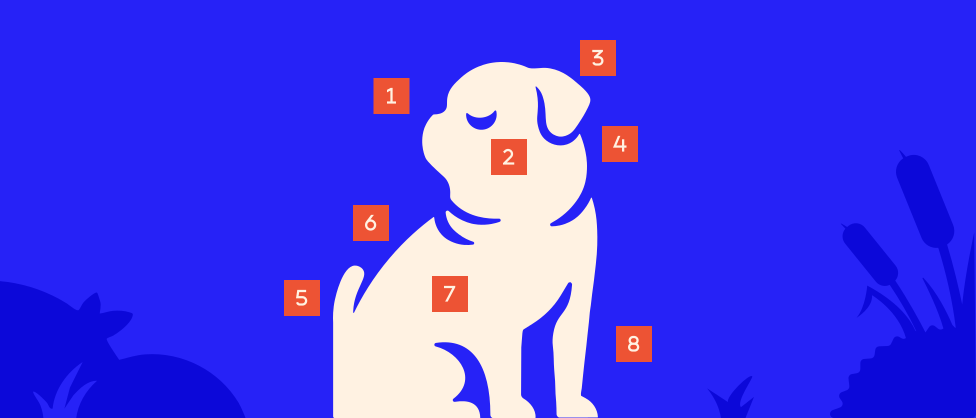
Extreme conformations in dogs
- Head: Flat-faces and squished noses
Brachycephaly can cause chronic breathing difficulties and many secondary complications that prevent dogs living normal lives. Find out more about dogs with brachycephaly and how to care for them.
Commonly seen in: Pugs and French Bulldogs
- Eyes: Bulging, sunken or protruding eyes
Dogs with bulging eyes are at increased risk of eye trauma and infections, which can be very painful and require surgery to correct.
Commonly seen in: Pugs and Cavalier King Charles Spaniels
- Ears: Abnormally shaped ears such as being very long
Very long or droopy ears can cause long-term, painful infections (that can spread to other parts of the body), ear problems and prevent communication with other dogs (as they can’t move their ears). They may even require surgery.
Commonly seen in: Basset hounds and Blood Hounds
- Head: Bulging or domed heads
Dome-shaped skulls can mean that the skull is too small for the brain to fit in properly. This leads to severe neurological problems – increasing the risk of brain conditions such as hydrocephalus, chiari-like malformation and syringomyelia – and can even be fatal.**
Commonly seen in: Chihuahuas and Cavalier King Charles Spaniels
- Tail: Short, curly or corkscrew tails
Dogs with screw tails can suffer with crippling back deformities, such as hemivertebrae, where spinal bones don’t form properly, as well as neurological disorders. They’re also unable to use their tails to communicate with other dogs and people.
Commonly seen in: French bulldogs and boston terriers
- Tail: Short, curly or corkscrew tails
Sloped backs can cause mobility issues, joint problems and chronic pain. A ridge along the fur on the back can cause an indentation in the skin along the spine. Depending on the depth, animals can experience severe neurological problems, chronic pain, infections and death.
Commonly seen in: German shepherds and Rhodesian ridgebacks
- Fur: Too much fur, hairless or skin folds
Large, long or thick coats can affect a dog’s ability to regulate their temperature, which puts them at risk of heat-related illness. If not regularly maintained, fur can become matted, heavy and pull on the skin, causing pain, discomfort and skin problems. Dogs without fur struggle to keep warm, suffer from heat exposure and may sunburn easily, increasing their risk of skin cancer. Skin folds can get itchy, sore, are at risk of infections and inflammation, and can cause lifelong skin problems which, in severe circumstances, require surgery to correct.
Commonly seen in: Shar Peis and Chinese crested dogs
- Legs: Short legs and long bodies
Dogs with long backs can suffer from chronic pain and even paralysis. Chondystrophy and chondrodysplasia, which cause this notable feature, leads to an increased risk of spinal problems which often require complex surgery to correct. They’re also less able to perform normal behaviours such as running, playing and jumping. Doing so may put them at increased risk of trauma.
Commonly seen in: Dachshunds and corgis
**Specialist surgery is required but isn’t always curative, and many animals with chari-like malformation and syringomyelia are euthanised to prevent suffering from uncontrollable pain. Animals with bulging or larger heads are harder to give birth to, meaning their mothers often undergo a caesarian section – if left untreated this can be fatal.
*Illustration depiction may not be accurate
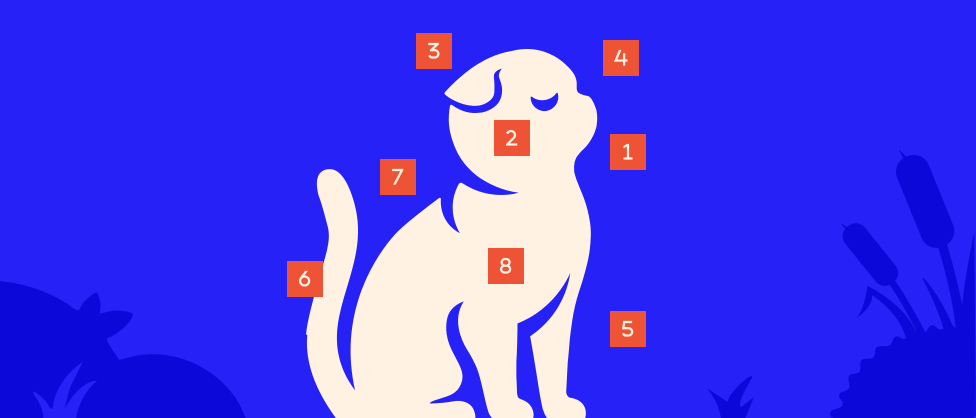
Extreme conformations in cats
- Head: Flat-faces and squished noses
Brachycephaly causes chronic breathing difficulties and secondary complications that prevent cats living normal lives. Find out more about cats with brachycephaly and how to care for them.
Commonly seen in: Exotic shorthairs and Persians
- Eyes: Bulging, sunken or protruding eyes
Cats with bulging eyes are at increased risk of eye trauma and infections, which can be very painful and require surgery to correct.
Commonly seen in: Persians
- Ears: Abnormally shaped ears such as folded
Folded ears can cause long-term and painful ear problems. Folded ears occur due to a genetic defect of the cartilage, which affects the cartilage throughout the entire body, causing severe pain and an inability to perform normal behaviours.
Commonly seen in: Scottish folds
- Head: Disproportionately broad head
The larger, brachycephalic heads of some kittens may make it difficult for the mother to give birth, as the head is less able to pass through the hips. This can be fatal to both mum and offspring.
Commonly seen in: Himalayans
- Legs: Short legs and long bodies
Cats with long backs can suffer crippling deformities. Chondystrophy and chondrodysplasia, which cause this notable feature, may lead to an increased risk of spinal problems which often require complex surgery to correct. They’re also less able to perform normal behaviours such as running, playing and jumping. Doing so may put them at increased risk of trauma.
Commonly seen in: Munchkin cats
- Tail: Tailless
The lack of tail can cause Manx syndrome (otherwise known as sacrocaudal dysgenesis or spina bifida), resulting from the poor formation of the bottom portion of their spine (backbone) and spinal cord. This leads to difficulty walking or challenges with bladder and bowel control.
Commonly seen in: Manx cats
- Body: Skin folds
Skin folds cause life-long skin problems. They require daily cleaning and care.
Commonly seen in: Persians
- Fur: Hairless
Cats without fur struggle to keep warm, suffer from heat exposure and may sunburn easily, increasing their risk of skin cancer.
Commonly seen in: Sphynx cats
*Illustration depiction may not be accurate
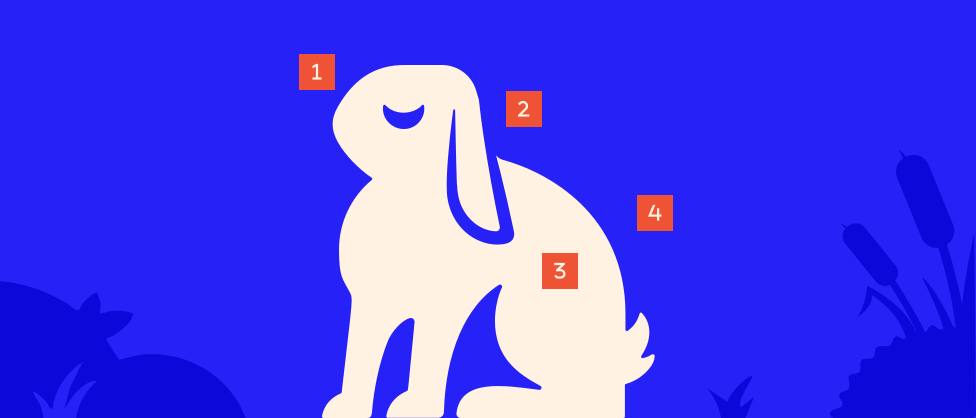
Extreme conformations in rabbits
- Head: Flat-faces
Brachycephaly does not cause breathing issues in rabbits like it does in cats and dogs. However, having a flat face is associated with teeth and tear duct problems. Find out more about rabbits with brachycephaly and how to care for them.
Commonly seen in: Netherland dwarfs
- Ears: Abnormally shaped ears such as very long, lop ears
Very long – ‘lop’ – ears can cause long-term, painful ear problems which may require surgery. Ear length in rabbits is also associated with dental issues, such as misalignment and overgrown teeth.
Commonly seen in: Lop-eared rabbits
- Fur: Excessive coat volumes
Large, long or thick coats can cause significant problems if not regularly maintained. Fur can become matted, heavy and pull on the skin, causing pain, discomfort and skin problems. When long-haired rabbits groom themselves, they can ingest their own fur, which may lead to blockages of the intestines.
Commonly seen in: Lionheads and Angora
- Body: Large, heavy animals
Very large and heavy rabbits – giant breeds – are at increased risk of heart disease, joint problems and skin problems. They also have shorter life spans when compared to smaller rabbits.
Commonly seen in: Flemish giants
*Illustration depiction may not be accurate
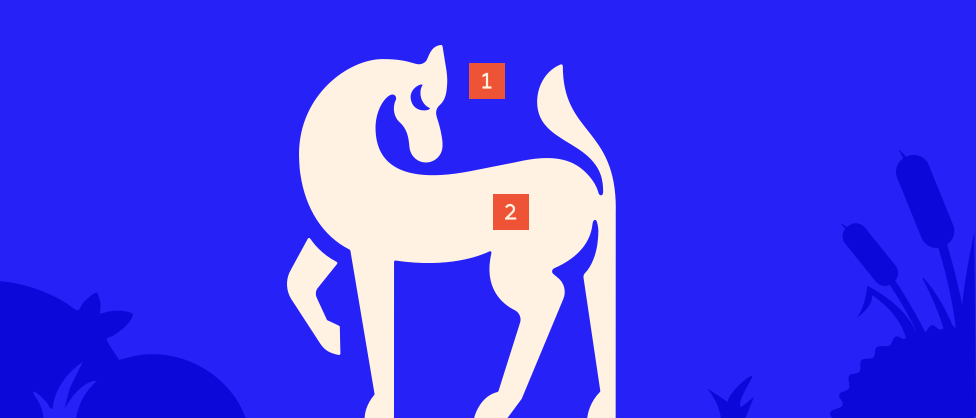
Extreme conformations in horses
- Head: Concave skull
Some breeds of horse can have a mild to significantly concave face. An exaggerated concave skull is associated with guttural pouch problems (air sacs), dental issues and other genetic disorders due to reduced genetic diversity.
Commonly seen in: Arab horses
- Body: Large, heavy animals
Very large and heavy horses may be at increased risk of heart disease and joint problems due to their size, particularly when they get older.
Commonly seen in: Shire horses
*Illustration depiction may not be accurate
The Shape of Suffering report
Download our report to discover why extreme conformation is a serious welfare problem, the vital role of six key stakeholder groups – owners, suppliers, service providers, advisors, the public and policy-makers – and how they can work together to address it.