
Small changes, big impact: How we can stop 1 billion farmed animals suffering by 2050
Author:
Posted:
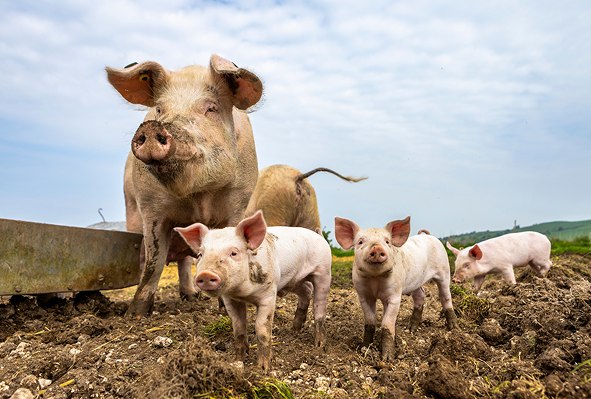
Lower-welfare farming
New University of Lincoln research shows that by making small, incremental changes to our diet, 1 billion animals could be removed from lower-welfare farms by 2050.
Lower-welfare farming is the single biggest animal welfare issue we face, affecting more than 70% of the animals we farm in this country. Ending lower-welfare farming is a complex challenge but this new data shows how small steps can help tackle the huge scale of suffering.
If everyone in the UK reduced the amount of animal products they eat by just 3% of current levels every year to 2050, it would lead to:
- 1 billion fewer animals suffering on lower-welfare farms by 2050
- Land three times the size of Wales (6.1m hectares) freed up for rewilding and plant proteins
- 40% reduced UK agricultural greenhouse gas emissions
- More space between farms and reduced stocking density leading to better disease control and slowing down antimicrobial resistance, which is better for animals and people
Why do we need to reduce consumption?
All farmed animals deserve better lives. Many people don’t realise that the vast majority of animals reared for food in the UK are on lower-welfare farms - sometimes called ‘factory farms’. We and RSPCA Assured want to see an end to lower-welfare farming which sees billions of animals kept in cages, or crammed into overcrowded sheds, with barely room to move freely or carry out all the behaviours that they enjoy. Animals deprived of their basic needs such as sunlight and comfortable bedding to sleep on, or suffering health issues and pain from being bred to grow unnaturally fast and abnormally large.
We are at a critical turning point. Last year, an estimated 1.43 billion animals* were farmed in the UK and that number is set to grow. If we continue to consume animal products at the same rate, population rises mean we would need nearly 160m* more animals a year to meet demand. This puts ever more pressure on farming systems, fuelling even more intensive, lower welfare practices which put maximum production and profit over welfare.
The best way to improve farmed animals’ lives now is to choose higher-welfare RSPCA Assured labelled products. However, higher-welfare choices alone cannot solve the problems of lower welfare farming. As 71%** of UK land is already used for agriculture, increasing demand would make it virtually impossible to give animals the space and conditions they need for a better life. We all need to eat fewer animal products to significantly reduce the number of animals on farms and end lower welfare farming completely.
Small changes make a big difference
Currently, 94%*** of people in the UK choose to eat animal products. Our attitudes towards food are complex - they are bound up in culture, tradition, social norms, health, taste, cost and more. Making big changes can feel overwhelming or feel like losing something we enjoy. We also want the best for animals - our 2025 Kindness Index showed 71% of us in the UK consider ourselves animal lovers. The University of Lincoln research shows that it doesn’t have to be all or nothing: small changes, a little bit at a time, can help transform the lives of farmed animals.
A 3% reduction in consumption of animal products per year, every year, to 2050 represents a manageable step in the right direction that will have a big impact. Based on the average consumption of a UK adult, this would equate to:
- Three fewer burgers or two fewer steaks per year to 2050
- Seven fewer sausages or three fewer pork chops per year to 2050
- Half a whole chicken less or four fewer chicken breasts per year to 2050
- Forty-five fewer bowls of cereal with milk per year to 2050
- Five fewer eggs per year to 2050
This is just an illustration of what 3% looks like, not a formula to follow and there are plenty of steps people can take to make a difference in their own lives.
Transforming the way we farm animals and produce our food can seem overwhelming but this research shows that we can all make small changes which make a big difference. Plant-based Fridays, meat-free Mondays or simply swapping out animal products for alternatives a few times a week could help transform farmed animals’ lives.
Everyone can make a difference to animals' lives by choosing to eat fewer animal products, and, when they do, by choosing the RSPCA Assured higher welfare label. However, individuals alone can’t make this change - we need to work with partners, farmers, retailers, industry and governments to end lower welfare farming for good.
Together for a kinder food system
We know this is the right thing to do for animals but we can only achieve a reduction in animal product consumption if we work with farmers, retailers, the food industry and governments.
We also know animals will continue to be farmed for many decades to come and it is crucial we continue to improve farmed animal lives now through RSPCA Assured, our farm assurance scheme. RSPCA Assured ensures millions of farmed animals every year live better lives and it is at the heart of our ambitions for a better future for all farmed animals.
Farmers must be at the centre of this transition to a kinder food system. There is a huge opportunity to bring many more farms under the RSPCA Assured label so that many millions more animals have better lives.
“In 2024, almost 28% of UK farmed animals, including Salmon, were covered by the RSPCA Assured higher welfare scheme**** - ultimately we want ALL farmed animals to be reared to higher welfare standards, under the RSPCA Assured label. Governments must support farmers and farm businesses by creating incentives and the right conditions to promote higher-welfare British farming, including preventing the import of lower welfare products from abroad.
Supporting higher welfare farmers
There are huge opportunities for retailers to support higher welfare farmers and also opportunities for the Government to incentivise and lead this change. The government should:
- Ban the import of lower-welfare products which undermine welfare and undercut British farmers.
- Support farmers by insisting public procurement sources higher-welfare products.
- Introduce mandatory method of production labelling to drive consumer demand for higher-welfare meat, eggs and dairy.
- Support the development of alternative proteins and seize the opportunity for the UK to be a market leader in this field.
Better for animals, people and the planet
As the population rises, we cannot continue to farm animals at this scale, causing such a huge and unsustainable level of suffering to billions of sentient creatures every year. It puts animals, the planet and ourselves at risk. We know what is good for animals is good for all of us which is why we are joining a growing number of organisations across animal welfare, health and the environment calling for a more sustainable, compassionate food system with animal welfare at its heart.
*2025 University of Lincoln research
**Defra figures
*** 94% of UK adults consume some form of animal produce (meat, fish, dairy or eggs) as part of their regular diet, and 86% of UK adults say they would not consider adopting a vegan diet within the next 12 months. RSPCA Assured commissioned YouGov survey - representative sample 2058 adults in the UK May 2024.
****RSPCA Assured Annual Review