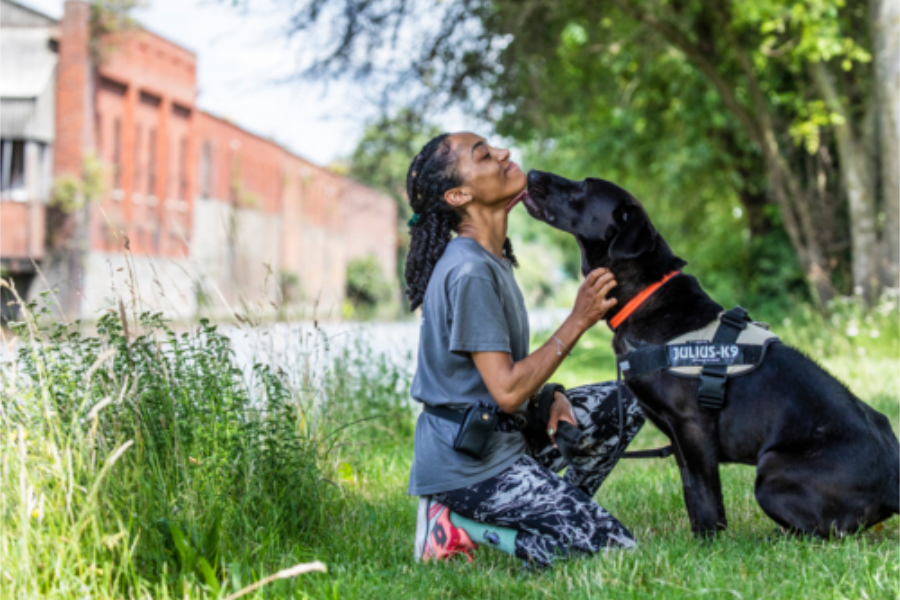
The Animal Welfare Evidence Centre
The Animal Welfare Evidence Centre brings together leading experts to strengthen our understanding of the root causes of cruelty and neglect, and our wider relationship with animals, so we can work together to change the way society treats animals.

page contents
Exploring the relationship between animals and humans
The RSPCA and the Katherine Martin Charitable Trust have come together to set up the Animal Welfare Evidence Centre. This is a partnership between the RSPCA and leading animal welfare organisations Four Paws, Compassion in World Farming and Humane World for Animals. It aims to plug critical gaps in research, building and strengthening evidence to deliver effective prevention of animal cruelty and neglect.
The centre will explore the relationship between humans and animals and what drives the way we use them in sport, fashion, entertainment or as food. It will look at how animal welfare is linked to other key issues, like health or housing and how we put animals at the heart of policy making.
Designed as a vital resource for the sector, it will support partners to work together to create an evidence-informed approach to designing interventions, influencing policy and embedding new practices which reduce harmful behaviour towards animals.
The aims of the centre
Between 2026 and 2029, the Animal Welfare Evidence Centre will bring the animal welfare sector together to integrate existing evidence, identify gaps and commission new research to further our understanding of the drivers of cruelty and neglect.
Through this work, the centre will support the animal welfare sector to lay the foundations for long-term systemic change which transforms our attitudes and behaviour towards animals.
The work of the centre will focus on
- 1 Understanding the causes of cruelty and neglect
- 2 Insight into how to prevent cruelty and neglect
- 3 Deepening understanding of public awareness, attitudes and cultural norms concerning animals
- 4 Applying a systemic approach to animal welfare, recognising that the challenges facing animals, people and the planet are interlinked
Funding acknowledgement
We are grateful for the generosity of the Katherine Martin Charitable Trust, whose transformational gift has been critical in establishing the Animal Welfare Evidence Centre. This donation is part of Katherine Martin’s legacy, with which she wished to create a kinder and safer world for animals and children.
Designed as a vital resource for the sector, it will support partners to work together to create an evidence-informed approach to designing interventions, influencing policy and embedding new practices which reduce harmful behaviour towards animals.
Founding partners
Compassion in World Farming
Compassion is the leading farm animal welfare organisation dedicated to ending factory farming and achieving humane and sustainable food.
Four Paws UK
FOUR PAWS UK is the global animal welfare organisation for animals under direct human influence, which reveals suffering, rescues animals in need and protects them.
Humane World for Animals UK
Humane World for Animals UK tackles the root causes of animal cruelty and suffering to create lasting, systemic change. We drive impact at scale by advocating for policy reform at all levels of government and by working with companies to help them adopt kinder practices.
The Animal Welfare Evidence Centre is a critical opportunity to deepen our understanding of what drives humans to harm animals so we can lay the foundations for the truly transformational change we all want to see for animals.
Our first research project
The Animal Welfare Evidence Centre’s first piece of research will explore the costs of animal cruelty and neglect to the economy. Similar studies around issues like mental health have been a powerful tool for organisations to lobby the government. This economic modelling would demonstrate the costs of cruelty and neglect of animals to individuals, governments, charities, public bodies such as police and the courts, and, most importantly, to the animals themselves. This research will form the basis of a strong business case for governments to invest in measures to prevent harm to animals.