
Kindness Index 2026 key findings
Our 2026 report shows growing public awareness of animal sentience and welfare, alongside increasing recognition of the impact human behaviour can have on animals. While this reflects positive progress, concerns around the cost of pet ownership remain high, and the influence of artificial intelligence on human-animal relationships is emerging as a new area of concern.

What we’re encouraged by
We continue to be a nation of animal lovers
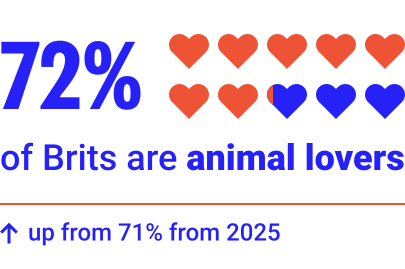
Over recent years, the number of adults identifying as animal lovers has steadily increased, a positive sign for the future of animal welfare. In 2026, 72% of adults described themselves this way. Among children and young people, levels remain particularly high, with 86% identifying as animal lovers in 2026, although this is a slight decrease from last year.
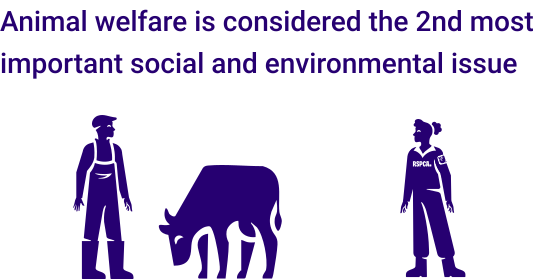
Animal welfare is the second most important cause to the public
Animal welfare is the second most important issue, with 32% placing it in their top three concerns, ahead of physical health (29%) and behind mental health (35%). Among children and young people, animal welfare remains equally important, with 62% saying they care most about animals being well cared for,
More animals are being recognised as sentient
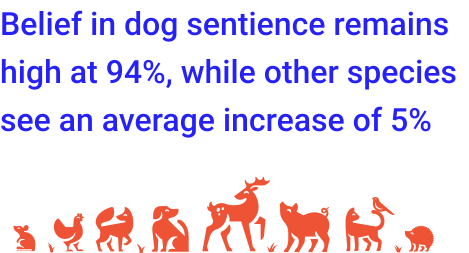
We are seeing a growing awareness of animal sentience. Recognition increased for every species measured, aside from dogs which remained consistently high (94%) and unchanged from last year.
Call for government
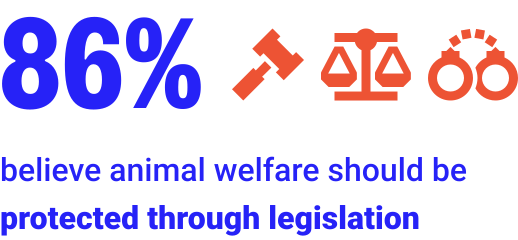
Increased public concern for animal welfare, emphasised by financial pressures on pet owners, is driving demand for government action. National government (68%) is now seen as the primary party responsible for animal welfare, followed closely by animal professionals (69%), and then by NGOs/charities (45%).
What we’re concerned about
More people have found sick wildlife
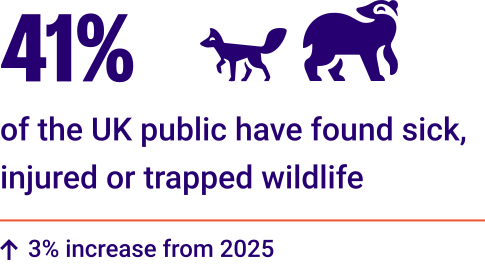
The number of the UK public encountering sick, trapped, or injured wildlife increased by 3% to 41% in the last year. 55% of those who haven't previously found such wildlife lack confidence in knowing how to help, which is also an increase from last year.
Pet care is more expensive than last year
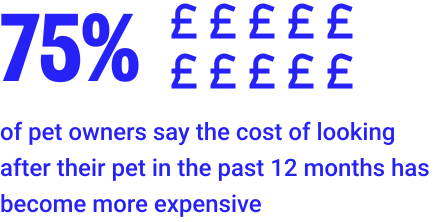
Unsurprisingly, 75% of pet owners report that the cost of pet care has increased over the last 12 months. This is a 7% rise since 2022.
The growing use of artificial intelligence
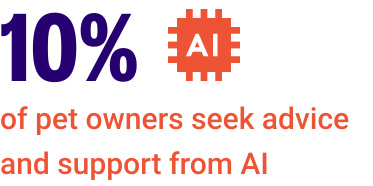
A significant 10% of pet owners now use AI sources like ChatGPT and Gemini for pet care advice, despite vets remaining the primary source (64%). Additionally, of the 27% who saw online animal cruelty in the past year, 13% suspected the content was AI-generated.
The number of meat eaters is growing
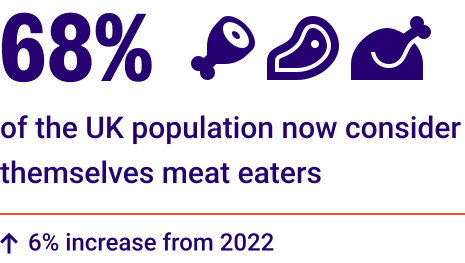
In 2026, 68% of the public identify as meat eaters, up 6% since 2022.
About the research
The 2026 Animal Kindness Index is the fifth in this series. The report from the RSPCA, Scottish SPCA and Ulster SPCA examines the responses of almost 7,000 people aged 7+ to understand how the UK population thinks about and feels and acts towards animals and animal welfare.
Through an online survey, YouGov surveyed a total of 5,797 UK adults (aged 16+) between 11th-31st March 2026, and 1,189 children (aged between 7 and 15) between 13th-31st March 2026. The results have been weighted separately across both surveys to be representative of the UK population. Data referenced from the adults’ survey is based on the responses from those aged 18+, which was a total sample size of 5,619 unless stated otherwise. When comparisons are made with previous years, it is done on the basis of respondents aged 18 and over.
In addition to the survey results, we looked at people’s behaviour by analysing Google search data, and drew on resources across the RSPCA, Scottish SPCA and Ulster SPCA, to produce The Kindness Index: Reality Check. The Reality Check is an additional layer of analysis that compares our findings from the Animal Kindness Index survey results (‘attitudes’) to ‘real-life data’, for example, TV programme viewing figures and the presence of government actions and legislation (‘realities’).


Related content
Seven Kind Acts for Animals
Help make this a Summer of Kindness for animals. Because kind acts, however small, combine to create a more compassionate world.


