
Food and farming
Every farmed animal deserves a good life.
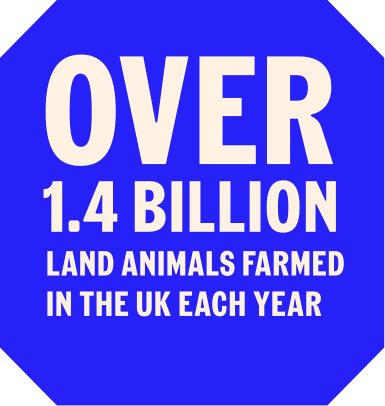
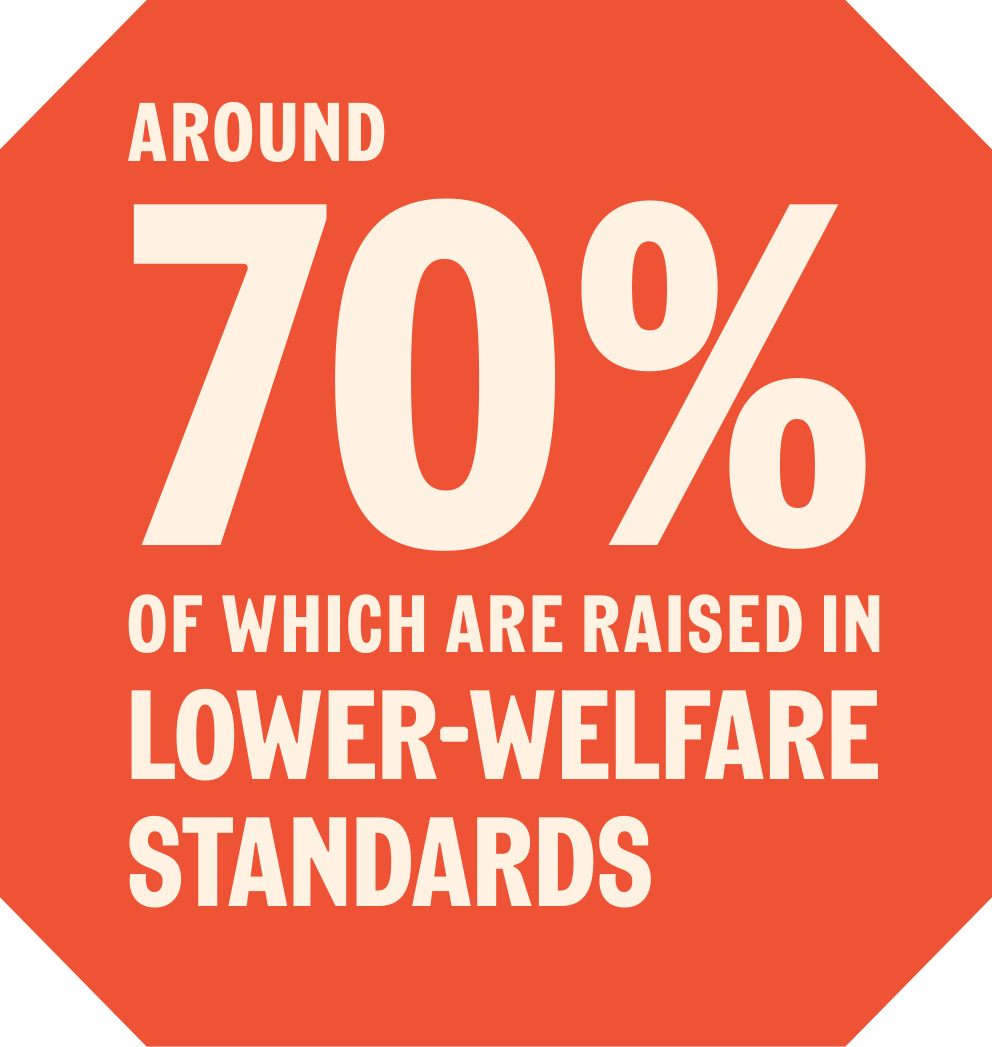
More than one billion land animals and around 77 million fish are farmed in the UK every year. Many are raised in lower-welfare systems, often called factory farming, that can prevent them from expressing their natural behaviours and cause suffering.
Our food and farming work aims to change that. By reducing the number of animals farmed and raising welfare standards, we can create a kinder food system for animals, people and the planet.

Why farm animal welfare matters
Farmed animals are sentient beings. They can experience pain and pleasure, and have behavioural and emotional needs.
But many animals in lower-welfare 'factory farming' systems are kept in cages or overcrowded sheds, with little space to move or express their natural behaviours. Some are bred to grow unnaturally fast or produce at levels that can cause serious health problems.
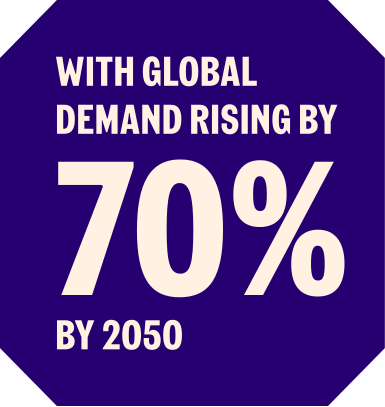
Demand for animal products is also growing. Global meat consumption is predicted to rise by 70% by 2050, increasing pressure on the farming industry and systems already designed to maximise production.
As long as demand remains high, it becomes harder to move away from lower-welfare farming. That's why improving farmed animals' lives means tackling both the conditions they're kept in and the number of animals we farm.

The scale of the issue
Our ambition for farmed animals
Our ambition is a future food system where fewer animals are farmed, those animals have better lives and farmers are supported through a fair transition.
We campaign to end lower-welfare farming practices and improve protections for farmed animals. Through RSPCA Assured, we also help drive higher welfare standards on farms and give people a clear way to identify higher-welfare products.
But higher-welfare farming alone can't end suffering on the scale we see today. Our strategy also calls for us to reduce the amount of animal products we eat across the UK by 2050.

Our 3% target
Around 94% of people in the UK currently eat animal products. Our target is to reduce consumption of animal products from current levels by 3% each year to 2050.|
Research we commissioned from the University of Lincoln shows that, collectively, achieving this reduction could mean almost one billion fewer land animals and more than one million fewer fish being farmed in the UK by 2050.
And 3% doesn't have to mean a dramatic lifestyle change. For the average UK consumer, it could be the equivalent of around:
- three fewer burgers or two fewer steaks a year
- seven fewer sausages or three fewer pork chops a year
- four fewer chicken breasts a year
- 45 fewer bowls of cereal with milk a year
- five fewer eggs a year
Small changes made over time can add up to something much bigger.
Our target sits alongside calls from organisations including Eurogroup for Animals, the Eating Better Alliance and Compassion in World Farming for significant reductions in animal product consumption.
How we can improve farmed animals' lives
Our food choices can help in two important ways: by choosing higher-welfare animal products and eating fewer animal products overall. Both can help create a food system where animals have better lives.
The changes you make are up to you and will depend on your diet, budget, health and circumstances.
1. Choose higher-welfare food
If you eat meat, fish, eggs or dairy, choosing higher-welfare products can make a real difference to animals' lives.
Look for the RSPCA Assured label when you shop. RSPCA Assured-certified farms must meet the RSPCA's higher welfare standards, including requirements around space, enrichment, transport and slaughter. The standards cover every stage of an animal's life and prohibit cages and crates.
2. Eat fewer animal products
Eating less meat, fish, eggs and dairy can help reduce the number of animals needed to produce our food.
If you're looking for ways to reduce meat consumption, you don't have to change your whole diet overnight. You could swap some of the mince in a favourite meal for lentils, try an extra plant-based meal, explore alternative proteins or simply eat animal products a little less often.
Reducing consumption also helps create the physical and economic conditions needed for more animals to be farmed to higher welfare standards.
Take action for farmed animals
We’re currently working on a full action plan to achieve the vital goal of removing 1 billion animals from suffering on farms by 2050, which will launch at the end of 2025. If you can’t wait to get involved, see below ways you can help right now.


Farming research and resources
Our approach is grounded in research into how changes to what we eat and how animals are farmed can improve animal welfare.
Food and farming: Reducing the consumption of animal products
Read the University of Lincoln research, commissioned by the RSPCA, into how reducing animal product consumption could affect the number and welfare of animals farmed in the UK.
Behaviour change research
Explore our research into what helps people make lasting changes to what they eat, while keeping animal welfare at the heart of their choices.