Over 100 guinea pigs found in one room amongst faeces, flies and hazards
Location:
Date:
RSPCA rescuers found 114 guinea pigs and 31 cats living amongst hazards and faeces in a Newport property full of live and dead flies. Their two owners have now been disqualified from keeping all animals for life.
The RSPCA attended the Duffryn house in May 2025 along with vets and Gwent Police, who had issued a warrant, following concerns for several cats. The RSPCA had previously addressed animal welfare concerns at the property for several years and had offered to rehome and help with neutering. However, this was not accepted, and the RSPCA were also not given access inside.
In her witness statement, presented as part of court proceedings, RSPCA Chief Inspector Emma Smith said: “As we entered the hallway, there was an extremely overwhelming smell of ammonia which continued right throughout the property.
“The property was extremely cluttered with household items strewn everywhere, and there was dust, cobwebs, dirt, grime, live and dead flies all in abundance throughout the property.”
Thirty-one cats were found in several different rooms in unsuitable conditions, while 114 guinea pigs were found in the living room in an environment the RSPCA rescuer said was “the worst” she had seen. (a video is available)
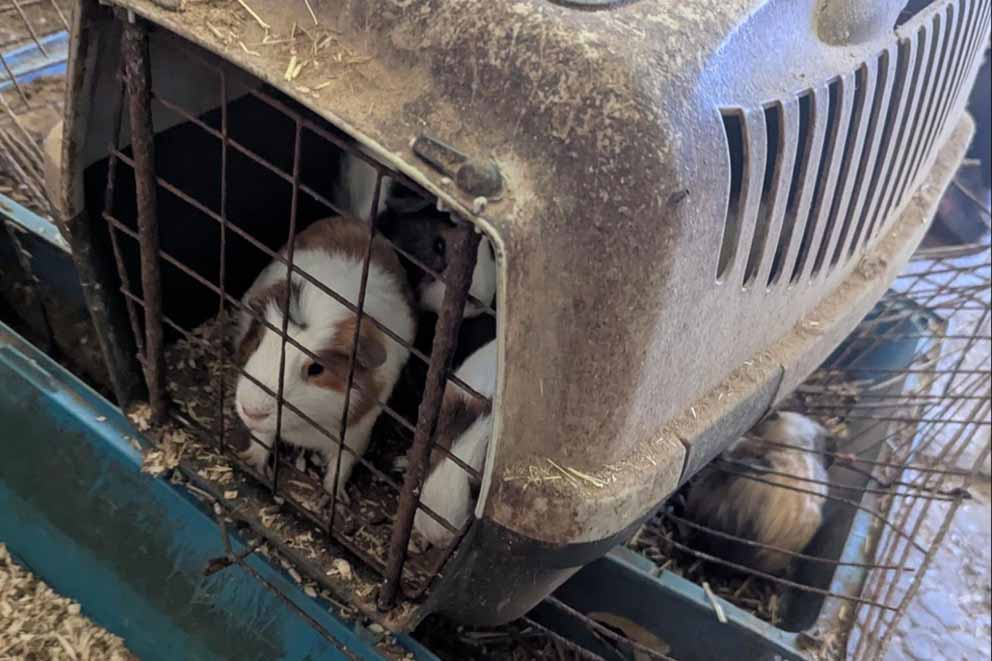
It took a vet, a vet nurse, and multiple RSPCA officers hours to locate and confine all the guinea pigs, as many were running around loose, with others confined to cat baskets or small indoor guinea pig enclosures, with some stacked on top of each other. One dead guinea pig was also found.
Helen Elizabeth Weston (d.o.b 30/10/1964) and Michael Bernard Weston (d.o.b 31/05/1953) of Sir Charles Square, Duffryn, Newport, both pleaded guilty to five offences* under the Animal Welfare Act.
Today (12 August), they appeared at Newport Magistrates’ Court, where they received their sentence and were both disqualified from keeping all animals for life - and will not be able to appeal this for 10 years.
“We entered each room one by one starting with room one on the first floor,” she said. “This was a bedroom that was extremely cluttered, smelly and grimy, with no ventilation. The door was secured shut, and two cats were located inside.
“There was water present in the room and some litter trays that were soiled.
“Due to the conditions inside the room and the temperament of the cats, it was impossible
for the vet to clearly examine the cats, but he was able to establish that multiple cats were displaying flu-like symptoms or ailments.”
Room two was a small bathroom with the door shut, and another two cats were found.
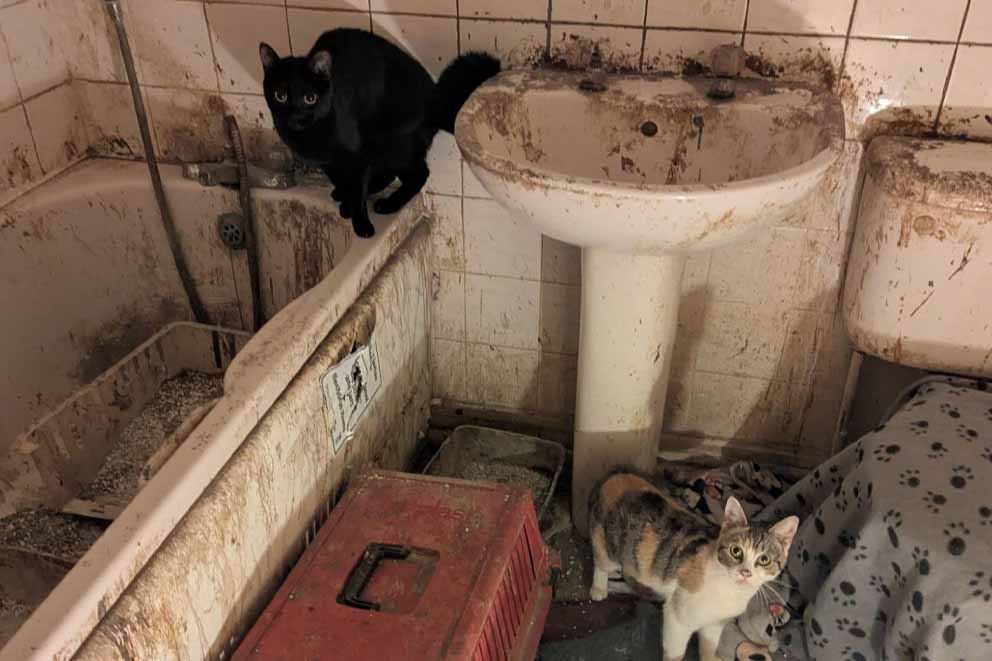
She said: “This room was in no way fit for purpose to either use as a toilet or as a room to keep cats. They had access to water and dirty litter trays, and dirty bedding was strewn on the floor. The door was blocked by cat carriers, and the smell of faeces and ammonia was overwhelming.
“There were no windows, natural light or ventilation, just a lamp switched on on the floor. It appeared as though this was the area where the cats spent all of their time. The cats were in various states of health, with some displaying flu and/or respiratory problems.”
Room three contained no animals but was a bedroom “which was overflowing with clothes and cat food”, and there were multiple dirty litter trays present.
On the third floor of the house, which was accessed via a “very dirty and grimy hallway” was room four, which was an en suite bedroom where five cats were found confined.
Chief Inspector Smith said: “This room was also filthy with a very overwhelming smell of faeces and ammonia. There was a small amount of water present and some dirty litter trays. The window in the room was shut so there was no ventilation and the door to the bedroom was firmly shut.”
Whilst moving the bed to try and locate some cats, there were piles and piles of very old mouldy cat faeces which had turned white. Attached to this bedroom was room five, which was a bathroom. The door to this room was secured shut by a Hoover lead tied to it.
She said this “room was the worst in the house”, and seven cats were located there.
“The smell of ammonia in this room was so overpowering that my eyes were watering and my nose lining was burning,” said Chief Inspector Smith.
“Similar to the other rooms, there was a small amount of dirty water present, some dirty/soiled bedding and overflowing/dirty litter trays. There was no ventilation or open windows. There was no clear floor space
to walk, and you had to step over multiple things.”
Two cats were found loose in the hallways which were “as dirty and cluttered as the other rooms”, and again the cats were in various declines of health.
In the hallway between the first floor and the second floor, there was a small, broken, indoor animal enclosure where a guinea pig was found.
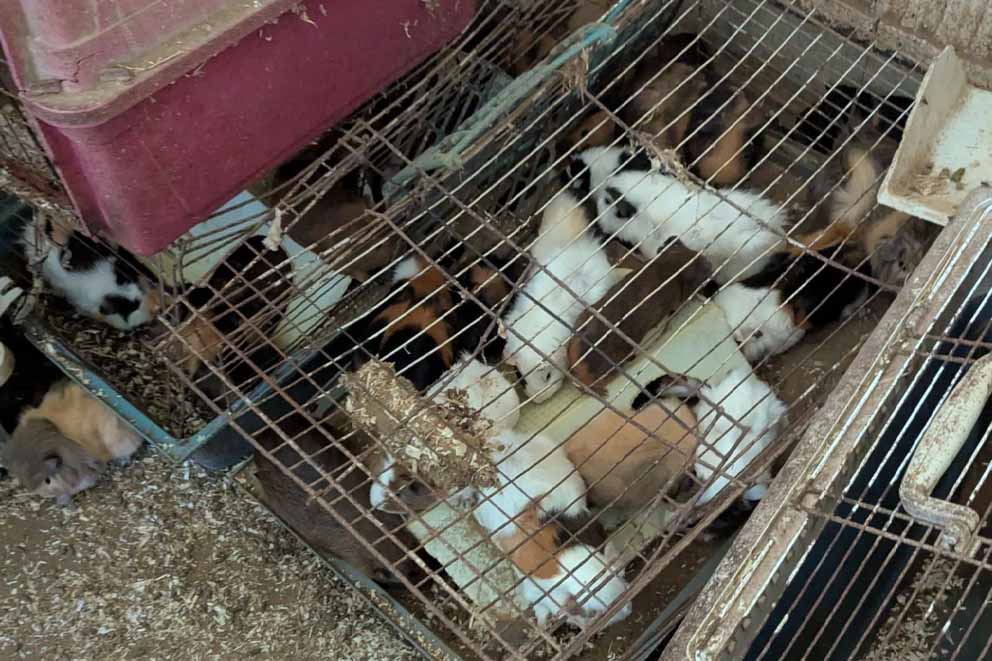
Chief Inspector Smith said: “The wiring on the cage was broken and unravelled, which meant it was unsafe, with large, sharp, metal sticks poking it. It also rendered the enclosure unsafe, so the guinea pig could escape or another animal could access the animal.
“The cats that had been loose within the hallways were able to access the guinea pig. The guinea pig stood on what appeared to be a very thick mat of mud which I believe to be very old, ground down, compacted faeces.
“There was a water bottle present, but there appeared to be something wrong with the spout, as when you touched the bottom of it and/or squeezed the water bottle, nothing came out.
“There was no hide present, which is extremely important for a prey species of this kind and no fresh food, just remains of old, dry, shrivelled-up vegetables. There was no environmental enrichment and no space for the animal to exhibit normal behaviour.”
Next to this enclosure were two other enclosures which were in the same state of disrepair and as unhygienic but did not contain any animals.
It was then they entered the living room on the ground floor which had been secured shut.
“This room contained an uncountable number of guinea pigs and was nothing like I had ever seen before,” said Chief Inspector Smith.
“There were in excess of 100 guinea pigs, multiple running loose and others confined to cat baskets or small indoor guinea pig enclosures, multiple of which were stacked on top of each other or had fallen to an angle.
“The environment was the worst I have seen, with ground-down faeces so thick and hard that it had produced a ‘mud carpet’ throughout the living room.
“The legs and bottoms of all of the furniture within the room had rotted, and there were large gaping holes within the sofas which multiple guinea pigs were running in and out of, amongst springs and rotten wood.
“There was a small amount of dirty water in a bowl in the middle of the floor, but all of the drinking bottles that I saw attached to cages that had guinea pigs confined were all empty.
“Whilst I was standing in the room, I observed multiple guinea pigs trying to access water from these empty bottles.
“The loose guinea pigs were running in and out of the fabric of the furniture remains and were exposed to metal springs and other hazardous materials.
“The guinea pigs confined within cages varied in group numbers, and some of the enclosures were extremely overcrowded.
“Again, the majority of these enclosures were broken, so had mesh wiring hanging out and
were not secure. They did not have access to a clean environment or hides or enough space to exhibit normal behaviour.
“The room itself was swarming with moth-type creatures and the smell of stale and animal excrement was overwhelming.
“As furniture was moved to look for guinea pigs, it would disintegrate in our hands and expose more dust/grime/cobwebbs/bugs.”
The 114 guinea pigs and 31 cats were taken into possession by police and placed into the care of the RSPCA.
Sadly, five guinea pigs were put to sleep on welfare grounds, and one passed away. In addition, due to ongoing health issues, the vet also deemed that six cats should be put to sleep.
This was consented to by the owner who “apologised for not engaging with the RSPCA sooner” and and admitted that the amount of animals they owned had got out of hand.
Mogs was also put to sleep on the advice of a vet.
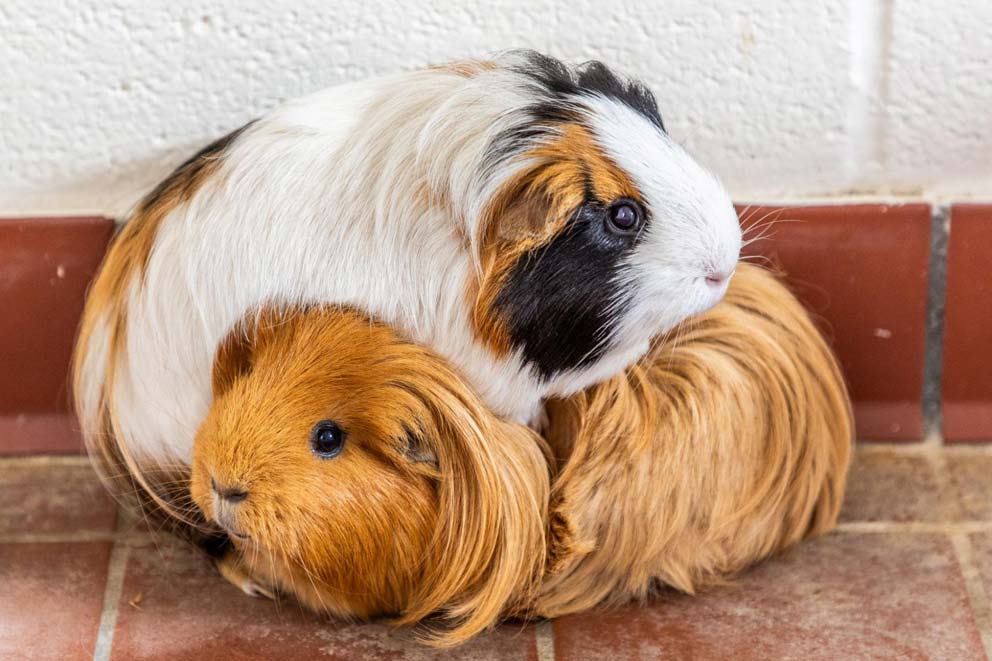
Following treatment and care, the guinea pigs and cats were taken to several RSPCA animal centres and private boarding facilities and have been happily rehomed. Many of the guinea pigs were pregnant which also added to the numbers in RSPCA care.
Following sentencing, Chief Inspector Smith, said: “All animals deserve to be treated with kindness and should have their needs met. Owners are responsible for their pets' needs and must seek help if things get out of hand. Neutering is so important and there are so many benefits, not to mention preventing unwanted offspring.
“Unfortunately we are seeing more multi-animal cases in general and we urge anyone who is struggling to seek help. I’d like to thank everyone who was involved in this case, from those involved in the initial rescue to the vets, and branches and centres who took on the animals.
“These animals have now been happily rehomed.”
Contact media and press
If you’re a journalist looking for interviews, quotes or images, get in touch with our media team. Or, if you’re after some quick facts and figures, we have you covered.