
Genetic health issues in cats
With 40 recognised breeds in the UK (and 73 globally), cats are suffering the repercussions of irresponsible breeding. We’re now facing the reality of a generation of genetically altered cats, with inherited diseases bred from cat to kitten.
On this page you’ll find definitions of different breed types, the associated health problems, and what to consider when choosing a cat of your own.

Jump to:
What are genetic health issues?
Genetic health issues are a result of a mutated gene or gene abnormality. Some genetic disorders have higher prevalence within certain cat breeds, which are then passed on, though some may occur due to spontaneous mutation. These disorders lead to health problems and suffering.
All cats can experience genetic health issues, although they can occur more frequently in purebreds. Sadly, a lot of these genetic conditions – and the welfare issues associated – are a direct result of being bred for specific features and breeding closely related individuals. For example, certain kidney problems (polycystic kidney disease) and heart conditions (hypertrophic cardiomyopathy) have become common issues for certain cat breeds through selective breeding for appearance and reduced genetic diversity.
What is a purebred cat?
Purebred cats have parents who are the same breed. Often, the two parent cats will have very similar ancestry, going back many generations.
As these cats are so closely bred, their lack of genetic diversity and narrow gene pool put them at risk of developing numerous health problems. Find out more below.
Sadly, for the first time ever recorded, purebred cats are now more popular than moggies – making it more important than ever that we spread awareness of the often lifelong conditions that purebred and pedigree cats can suffer. We want to see a world where cat owners prioritise pets based on their health and wellbeing, not their looks.
What is a pedigree cat?
A pedigree cat is also purebred – having both parents of the same breed – however, they will be registered with a recognised breed club or society, such as the Governing Council of the Cat Fancy (GCFC), the International Cat Association (TICA) or Felis Britannica (FB).
Pedigree cat breeds are bred to emphasise certain physical features that align with breed standards, set by breed clubs and societies. This is often to win appearance-based classes at cat shows and competitions. As with purebreds, sometimes this can cause great suffering to the cats. Learn about the associated health issues below.
Important information
Certain diseases are more common in specific breeds, known as breed disposition. To stop diseases being passed from cat to kitten, individuals known to have or be a carrier of a genetic condition shouldn’t be used in breeding programmes. We strongly believe that more needs to be done to implement responsible breeding practices, such as licensing of cat breeding and a better uptake of genetic testing, to minimise genetic health issues.

How do I know if a cat is a pedigree?
All pedigree cats will be registered with a breed club or society (like the GCFC, TICA or FB). Each of these will provide proof of the cat’s pedigree status – usually a certificate that traces back three to five generations. Pedigree cats normally come with this documentation.
What is selective breeding?
Selective breeding is the process of choosing specific traits – physical, like coat length and folded ears, as well as behavioural, such as increased confidence and sociability. Two cats with these features are then bred so their offspring are more likely to have the desired traits.
Cats haven’t changed much throughout history; their role as rodent hunters came about due to their natural predatory trait. This was considered a necessary requirement for people in the past – to help rid pantries and farms of rodents. Nowadays, cats are beloved companions chosen not for their abilities, but simply for their company.
However, in the 19th century, cats began being bred for appearance and aesthetics, coinciding with the growing popularity of pedigree cat shows. Physical features were favoured over health and welfare, breeding generations of cats who suffer from a range of genetic abnormalities and leading to long-term suffering.
What is a non-purebred cat?
A non-purebred cat – affectionately known as a ‘moggy’ – is a mixed breed cat. This means they’re not pedigree; their parents aren’t the same breed as one another, and are instead a mix of many unknown breeds, evolving from years of natural selection. Moggies are bred for many reasons, but looking a certain way to compete in shows is not one of them.
If two purebred cats, each of a different breed, have been intentionally bred, the resulting kitten will be a crossbreed. This is often done for aesthetic reasons. However, out-crossing – a scientific and strategic form of cross-breeding – can increase genetic diversity and improve health and welfare.
Unlike purebreds and pedigrees, moggies have a wider, more diverse gene pool, which reduces their risk of inheriting genetic disease.
However, all cats can be affected by genetic disease, and the risk is not fully removed through mixed breeding. Some research suggests that moggies are more likely to develop certain conditions than purebreds.
What are exotic and wild cat hybrids?
Exotic and wild cat hybrids, such as Bengals, chausies and Savannah cats, are bred from crossing a domestic cat with a wild cat, such as a serval (a small wildcat native to Africa). These cats have very complex needs which can’t easily be met in a typical home environment.
Hybrid cats are often closely related to their wild parents and ancestors – their temperament will be more of a wild cat than a domestic one. As keen hunters, they’re more active and require larger areas to explore, and will find it difficult to be housed indoors as this will prevent them from carrying out their natural behaviours. When wild and exotic cat hybrids are let outside, they’ll affect and disrupt local wildlife more than domestic cats.
At the RSPCA, we don’t support the breeding or acquisition of exotic and wild cat hybrids.


Sadly, some purebred cats are more likely to inherit conditions which can negatively impact their welfare. To help protect them, responsible breeding, which includes testing and screening, is essential.
What health problems can these cats have?
Some inherited conditions are extremely painful, reduce the cat’s normal, everyday functioning and can even cause premature death. Others are very rare or cause minimal suffering. However, many inherited conditions show particularly high levels in certain breeds; including cancer, kidney disease, diabetes and asthma. While purebred cats are more likely to develop some of these issues, all cat breeds, including crossbreeds and moggies, can suffer.
Health problems of purebreds and pedigrees
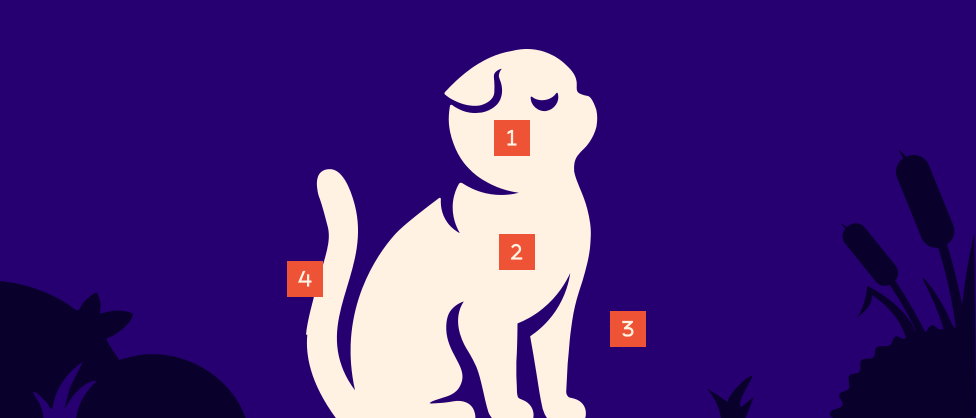
Sadly, some pedigree or purebred cat breeds are more prone to inherited health conditions due to limited genetic diversity within their breed. From relatively minor issues to serious, life-threatening conditions, common cat genetic health issues include:
-
Congenital strabismus: This common condition causes the eyes to cross, seen often in Siamese, Himalayan, Ragdoll and Persian cats. Cats with strabismus will appear cross-eyed, and may have difficulty judging distances, struggle to see their food or jump. Luckily, cats that are born with strabismus aren’t often impaired by the condition and usually don’t require treatment, but if a cat born with normal eyes becomes cross-eyed, this should be assessed and treated by a vet. Physical and ophthalmic exams, other eye tests and sometimes neurological exams are used to diagnose strabismus. Additional tests may include bloodwork, imaging and referral to specialists. Strabismus caused by genetics can’t be cured, but cats can live happily in the right conditions.
Congenital deafness: This condition occurs when the structures responsible for hearing, particularly the inner ear, don’t develop normally or fail to function correctly during early development, resulting in permanent hearing loss. It’s most commonly associated with white cats with blue eyes due to a genetic link between pigmentation and hearing development. Deafness can be diagnosed by observing the kitten’s reaction to sound, or via a vet-performed Brainstem Auditory Evoked Response (BAER) test. Congenital deafness in cats can’t be reversed, but safety adjustments can be made to their home environment, meaning deaf cats can live safely and comfortably. -
Hypertrophic cardiomyopathy (HCM): This is the most common heart condition in cats, causing the walls of the heart to thicken, reducing its ability to pump blood around the body. Symptoms include difficulty breathing, lethargy, fainting and paralysis of the limbs (leaving cats unable to move their back legs). Certain breeds are more likely to suffer from HCM, including Maine Coons and Ragdolls. HCM is diagnosed with echocardiography, blood tests or X-ray. It cannot be cured, but can be managed via medications to improve the cat’s quality of life.
-
Polydactyly: This is when a cat is born with extra toes, usually on the front paws. Cats normally have 18 toes, but polydactyly cats can have up to 28. This genetic condition is a result of a mutated gene that regulates limb development. Cats are able to live normally, but may require additional grooming and nail trimming to protect the paw.
Gangliosidosis: This fatal neurodegenerative disease causes kittens to develop tremors from three months old, and progresses to blindness, seizures and death by the age of nine to 10 months. This is an untreatable genetic condition, but it is preventable. Breeders can now test for the mutated genes (GM1 and GM2) that cause gangliosidosis, allowing them to make informed breeding decisions (responsible breeders won’t breed carriers of this trait) and reduce the spread of the disease. -
Spina bifida: This genetic condition, known as manx syndrome, occurs as a result of having a shortened tail or no tail. Poor formation of their lower spine, spinal cord and nerves can lead to difficult walking, bladder and bowel issues, weakness in the cat’s rear end, and even paralysis of the back legs (in severe cases). Symptoms include wobbly back legs when walking, lack of tail, rear end weakness, constipation, incontinence, urinary tract infections, inability to jump and numbness or paralysis of the back legs. Often diagnosed as kittens via physical exam, X-ray and a neurological exam. There’s no cure, but can be managed with medication, good hygiene and adaptations to their environment.
Cats face many other genetic health issues as a result of extreme conformations – find out how selective breeding can cause suffering here.
Health problems in moggies
Despite moggies (mixed and crossbreeds) having a lower risk of developing genetic disease, they aren’t immune. As the health and genetics of the parents directly influences the health of their offspring, screening tests should be carried out to reduce risk.
Preventing health problems in cats
Thankfully, some hereditary diseases can now be tested for in advance. Screening tests allow breeders and prospective cat owners to check for potential health and conformation problems in their cat, or the parents of a kitten. Tests also show if cats are carriers of genetic illnesses, but are not likely to suffer from this themselves.
Responsible breeding of any type of cat – moggies or purebred – can help prevent health problems in future cat generations, increasing genetic diversity and lowering the risk of inherited disease. This involves comprehensive health testing, genetic screening, conformational screening and selecting cats with a sound temperament before breeding.
Sadly, there’s a significant lack of cat breeding legislation compared to dogs (currently cat breeding is only regulated in Scotland). This means that breeding standards prioritising cats’ health and welfare aren’t monitored or enforced, leading to more generations of cats with severe and debilitating inherited health issues. This needs to change.
We believe that all those who breed cats, whether pedigree, purebred, or moggies, should prioritise health, welfare and temperament over appearance. Responsible breeding protects the health and welfare of cat parents and their kittens; which will always be more important than profit and the way they look. If we want our cats to be healthy, we must breed healthy cats.




*Cats Protection CATS UK annual report 2025
What to think about when choosing a cat
Adoption is one of the most rewarding acts of kindness – for both person and pet.
We’ll always encourage rescuing a cat over buying one. With more cats in our care than ever before – ready to curl up in the lap of a loved one – the chances are we’ve already found the perfect cat or kitten for you. Meet our rescue cats here.
However, if adoption isn’t possible and you decide to buy a cat or kitten, make sure to choose one well suited to your lifestyle and environment, from a responsible and reputable breeder. We don’t recommend getting a cat with any extreme physical features, due to the risks of long-term health and welfare problems and the associated emotional and financial impact. Find out more about pets with extreme conformations here.


