
Government boosts animal welfare but we all have to play our part
Author:
Posted:
Tackling lower welfare farming
One of the most critical challenges facing animals today is the rise of lower welfare farming. In the past century, with rising populations and growing demand for food, we have industrialised animal farming to cope with demand. We now slaughter more than a billion animals every year in the UK alone. This has given rise to practices which maximise production at the expense of welfare - such as caging animals. These have become a normalised and accepted part of farming, despite the suffering they cause.
About 20% of the UK’s hens and 60% of adult female pigs (sows) are caged. Each year, around 8 million hens spend their entire lives in cages with roughly the size of an A4 sheet of paper allocated to each bird of usable space. Around 200,000 sows every year in the UK are put in farrowing crates just before giving birth until around four weeks after their piglets are born. These metal crates are so small that the sows can’t even turn around. The Government’s strategy promises to consult on ending the use of cages for hens and pigs. This is popular with the public: our Animal Futures Citizens’ Assembly, part of the first ever national conversation on animal welfare, voted to ban cages in UK farming. But a consultation is only a first step - we need to see action if we are to get rid of cages and transform the lives of millions of animals every year.
Alongside this, they have promised to consult to end the use of CO2 gas killing of pigs. This is currently the only legal, commercially viable method available, and is used to kill 90% of pigs raised for food in the UK. High concentration CO2 causes pain, fear and distress before pigs become unconscious and we have been calling for a phase out of its use for many years. The public backs us - earlier this year more than 22,400 people signed our petition to end its use. If the government acts on this, it could end the suffering of millions of pigs every year at the time of their death.
The government announced that they will promote slower growing chicken breeds. The welfare of fast-growing chickens is one of the biggest in UK farming, with 90% of the billion chickens slaughtered every year growing so fast they can struggle to walk around properly, often suffering from heart defects, lameness and early death. Our 2020 report Eat, Sit, Suffer, Repeat concluded many of these chickens don’t have a ‘life worth living’. We welcome this but much more is needed to be done to end the use of these breeds for good.
Other measures include the first legal standards for fish slaughter and guidelines for killing decapods, such as crabs and lobsters, including proposals to end live boiling. This is long overdue as these creatures were recognised as sentient and able to feel pain, under the 2022 Animal Sentience Act.
People in the UK care about how their food is produced. We consistently see that consumers want governments to take a lead on improving farmed animal welfare. The Government has made an important first step towards ending some of the longstanding, cruel practices that have become acceptable in UK farming. There is much more to do and we want to continue to work with the government and industry to create a fairer, more compassionate and more sustainable food system.
This includes introducing mandatory method of production labelling. We are still awaiting the next steps on the Government’s consultation which was carried out a year ago; 99% of individuals who responded to the consultation supported the move to introduce clear labelling. This is an essential next step if we are going to give consumers the power to make an informed choice and vote with their wallets for better welfare. We know that, when given the information, shoppers will choose better for animals. They already do it with eggs, as a reported 60-74% of eggs bought in the UK are free range. RSPCA Assured labels already guarantee that the animal has had a better life, but making sure the label on every animal product is transparent and honest about how those animals have been reared could transform the way we farm in the UK.
Wildlife deserves protection
Alongside farmed animals, the Government pledged to tackle the use of snares, which cause indiscriminate pain and suffering to wild animals and pets, and consult on an end to trail hunting, which is being used as a smokescreen for the illegal hunting of foxes with dogs. Our Kindness Index revealed that protecting wildlife was the number one issue (71%) people in the UK wanted us to address. These are important steps to tackle key issues that impact wildlife, but more needs to be done. Wild animals cannot be collateral damage in the way we live our lives, whether it is encroaching on their habitat, the way we manage our land or using them for sport or entertainment.
Ending extreme breeds of pets
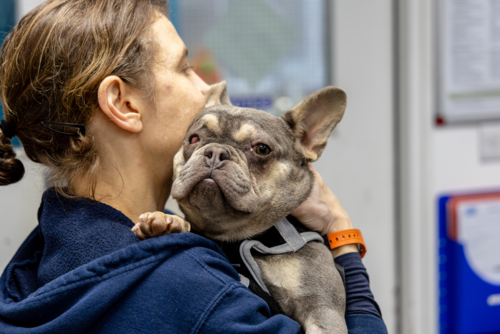
There were encouraging steps to improve the way we breed dogs in this country. Tighter regulations on dog breeding could also see measures to tackle the extreme breeding which puts looks over welfare and we welcome proposals to ensure every breeder must be registered.
There are measures to crack down further on puppy farms and the government also proposes licensing dog fertility clinics, which are currently unregulated meaning there is nothing to protect the welfare of animals being bred at these facilities. Measures to introduce better regulation of how we breed our animals could help protect pets from pain and suffering and their owners from heartbreak.
We all have a part to play
We know animal welfare matters to people. Our recent Citizens’ Assembly showed that people want better for animals, whether it is the animals in our homes, on farms or in the wild. This strategy is an important first step towards addressing some of the key practices which cause suffering and distress to animals. It is critical that the government makes robust laws and enforces those laws effectively. However, we all have a role to play in changing the way we see and treat animals if we are going to radically transform animal welfare in the UK.
Good legislation, properly enforced, is crucial but we all need to play our part in changing the world for animals. Industry must look at ways it can innovate to reduce its impact on animals and incentivise consumer behaviour which promotes animal welfare. And individuals can make important choices, whether it is buying higher welfare food, rescuing instead of buying pets or choosing breeds which have been bred to live happy and healthy lives, rather than putting looks over welfare.
We need a robust Animal Welfare strategy, because the way we breed animals, rear them for food, sell them for profit, use them for sport or encroach on their habitat can have serious unintended consequences for their welfare.