Investigating and prosecuting animal cruelty
In the vast majority of cases, we work with owners to improve their animals' care with advice and support. Where there is serious cruelty or suspected criminal activity, or where support and advice doesn't work, we will investigate. On this page, you’ll learn how the RSPCA investigation process works.

Jump to:
When do we investigate animal cruelty?
The welfare of animals is our highest priority. Our RSPCA animal rescue officers (AROs) and inspectors investigate when animals have suffered serious cruelty and abuse or when advice and support has failed.
We also investigate if we discover organised animal crimes, such as badger baiting, dog fighting or illegal puppy farming, where people are deliberately exploiting or harming animals.
What powers do RSPCA inspectors have?
Many people think that RSPCA AROs and inspectors have special powers to investigate animal cruelty, but this isn’t the case. We have no statutory powers which would allow us to enter properties or private land without permission and are not able to seize animals.
We see some of the worst cases of cruelty and sometimes there is no option but to investigate.
When we get that animal to safety and they go on to find a new loving home, it makes it all worthwhile.
What we can and can't do
We’re calling on the UK and Welsh Governments to grant our inspectors statutory powers to be able to enter private land and outbuildings where they suspect an animal is suffering. It would also make our improvement notices legally binding, meaning we could help animals quicker and lift the burden on some of our public services.
What we can't do
- As our RSPCA AROs, inspectors and investigators have no special, statutory powers, we cannot enter a property or private land without permission. Where we suspect cruelty or neglect, and an owner refuses to co-operate, we will work with the police to get a warrant to enter the property with police officers.
- We can't seize an animal. We can enter a property on a warrant with the police, and their officers can seize animals if a vet confirms an animal is suffering. The police then pass the animals into our care.
- We can't enforce improvement notices given to owners to improve their animals' care.
What we can do
- We can talk to owners and try to work with them to improve the care of their animals.
- If invited in, we can check out an animal's welfare and offer support.
- If an owner can't cope, we can ask them to voluntarily sign over an animal into our care. If they do, we can then take it to a vet, centre, branch or partner charity for care.
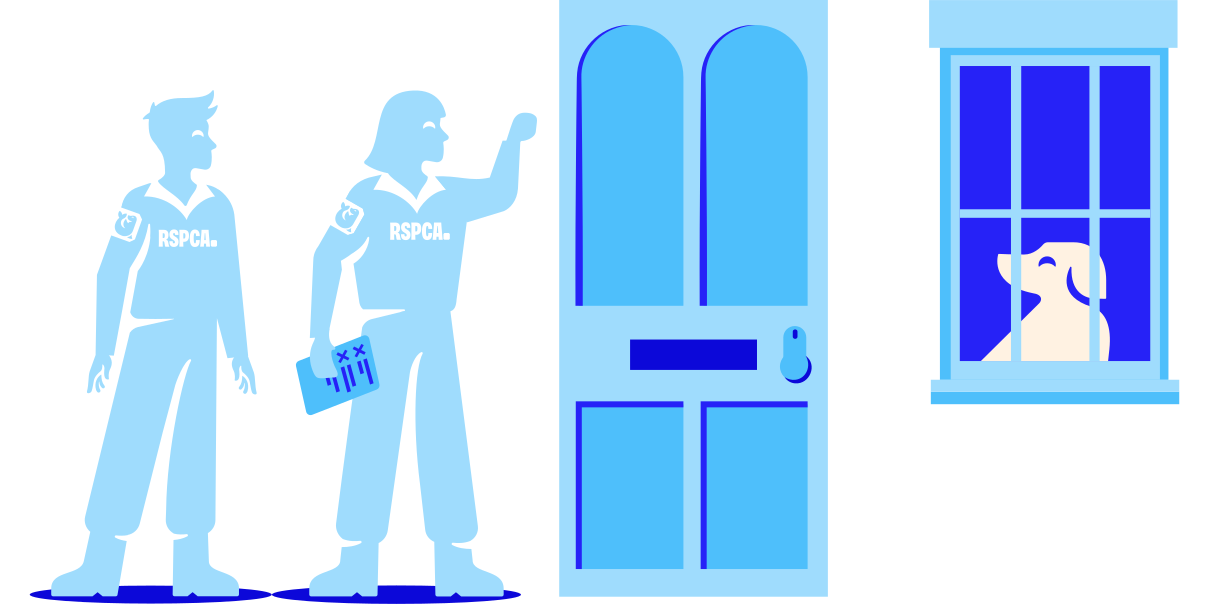
The RSPCA investigation process
If our specially trained AROs or inspectors suspect that an animal welfare offence has been committed, they will then gather evidence.
-
Ask for a warrant
Our inspectors have no special powers and we cannot enter a property or private land and outbuildings without permission. If we suspect an animal is being mistreated and someone refuses us entry, we ask the police to get a warrant, which must be granted by a court – this can take days.
-
Visit the address
We attend the address with the police and a vet. The vet must sign a certificate before the police can remove any animal into our care.
-
Prepare a case file
Our inspectors will prepare a case file containing evidence such as witness statements, photographs, and veterinary or other expert advice. Following legal guidelines, we gather evidence which can be used in court.
-
Submit our case
Once the investigation is complete, the file is submitted to our prosecutions team, who consider whether the case ought to be prosecuted.
-
Suspect animal cruelty?
Call us in confidence on 0300 123 8960 or report it to the police.
How we prosecute animal welfare offences
Once our inspectors have gathered evidence and prepared a case file, our prosecutions team will decide whether to prosecute.