
What our survey data tells us about pet grief
Pet grief is real. Let’s talk about it.
Over two years, thousands of people have shared their experiences of losing a beloved pet. Their stories reveal the hidden toll of pet loss – from guilt and loneliness to the need for better support at home, at work and for families. Together, these findings help us better understand pet grief and how we can support one another.*

Key findings on pet loss
More than 4,000 people have taken part in our annual pet grief surveys, bravely sharing what loss felt like for them. The results reveal just how deep this grief can run, and how often it goes unrecognised. We hope these findings offer a sense of understanding and solidarity, wherever you are on your journey.

Not ‘just a pet’. Over 99% of us see our pets as family, best friends or companions*
- Less than 1% of people (0.7%) view their pet as their ‘pet’ (with over 99% of people stating them to be “Part of the family” 60.3%, “My best friend” 31.5%, “My companion” 7.5%).
- 34.5% of people experienced people thinking or telling them ‘it’s just a pet’.
- 75.4% experienced anticipatory grief at the thought of them passing.
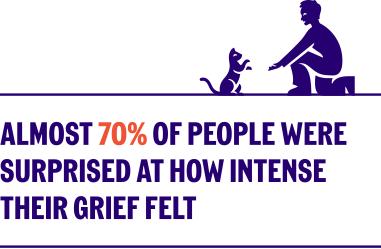
- 66.9% of people were surprised at how intense their grief felt.
- Over half (56.7%) were unable to find the support they needed.
The stigma around pet grief*
- 57.1% of people felt they had to hide their grief.
- 57.8% of people believe there is a stigma around pet grief/ only 15.8% of people believe there isn’t a stigma around pet grief (25.5% not sure).
- Only 6.9% of respondents believe that pet grief is taken as seriously as it should be in society (69.3%- No, 21.5%- Somewhat, 2.3%- Not sure, 6.9% yes).
- 28.4% of respondents felt unable to take time off work or other commitments to grieve.
- Only 13.4% of people felt their grief was fully understood by others.

Physical effects of pet bereavement*
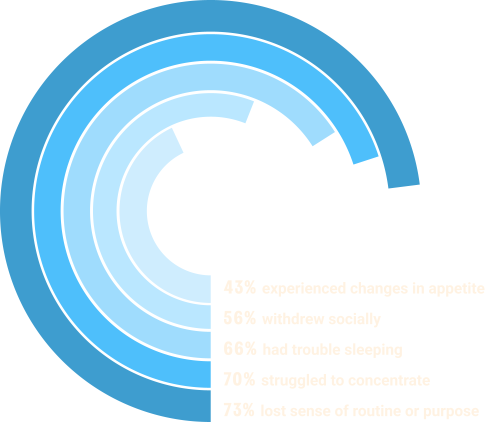
- 72.6% of people reported a loss of daily routine or sense of purpose
- 69.8% of people reported difficulty concentrating or functioning
- 65.9% of people had trouble sleeping
- 56.4% of people reported withdrawal from social interaction
- 43.1% of people reported changes in appetite.
Emotional effects of pet bereavement*
- 93.4% of people reported feeling heartbroken
- 92.9% of people felt deep sadness
- 59.5% of people felt guilt
- 54.6% of people felt loneliness
- 52.8% of people felt symptoms of depression or anxiety
- 28.4% of people didn’t know where to look for support when grieving a pet
Common struggles when saying goodbye to a pet*
- 75.4% experienced anticipatory grief at the thought of them passing
- 39.4% of people struggled to know when was the right time to euthanise their pet
- 26.2% of people struggled to find a way to memorialise or mark the loss of their pet
Many struggle to help children cope with pet loss**
Our survey highlighted the challenges many parents and carers face when supporting a grieving child, while coping with their own loss.
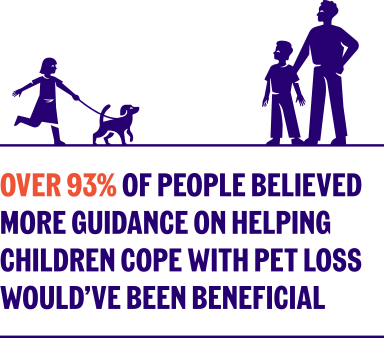
- 93.4% said they would have benefitted from more guidance on helping children cope with pet loss.
- 72.8% said managing their own emotions while supporting a child was particularly difficult.
- Many also told us they struggled to know what words to use and how much information to share with children of different ages.
Pet grief affects people at work**
Many respondents said their grief affected their ability to work and felt employers could do more to recognise and support pet bereavement.
- 92% of employed respondents said their grief affected their ability to work to some extent.
- 77.4% believe pet loss is not taken seriously enough in the workplace.
- 71.8% said they would be more likely to work for an employer offering pet bereavement support.

**This section is based on the results of the RSPCA Pet Grief Survey 2026
**This section is based on the results of the RSPCA Pet Grief Survey 2026